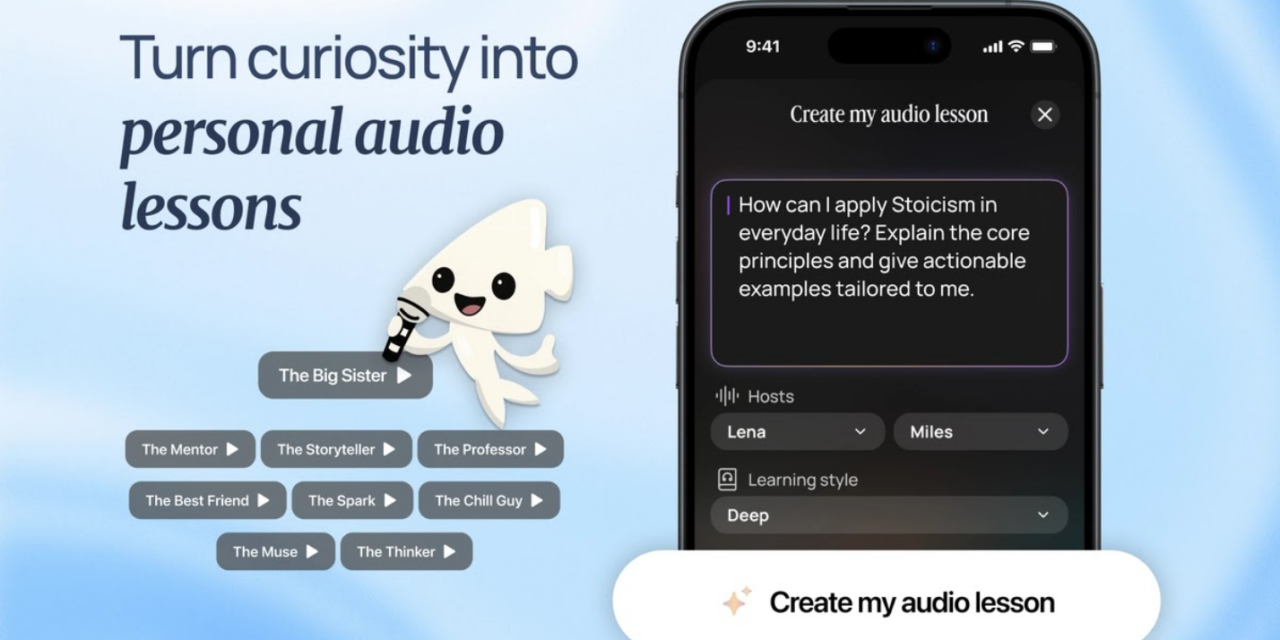
The leading alternatives to Spotify audiobooks include BeFreed (personalized audio learning), Audible (casual fiction), Blinkist (rapid text summaries), Shortform (deep analysis), and NotebookLM (AI podcast generation), depending on your specific educational goals.
Updated May 2026. As the audio landscape evolves, passive listening is no longer enough for goal-driven self-improvers. We have reached a point where the format of digital content often creates more friction than the subject matter itself.
Industry data reveals a massive shift toward structured microlearning, driven by the realization that standard 10-hour formats hinder active retention. Throughout this guide, we will explore how BeFreed and other leading platforms address these structural barriers to help you actually retain what you hear.
What are Spotify audiobooks and how do they work?
Spotify audiobooks operate as a premium streaming feature that grants eligible subscribers 15 hours of recorded listening time per month from a catalog of over 300,000 titles.
Introduced to expand the platform’s utility beyond music and podcasts, this feature targets casual listeners seeking high-production narrative content.
As of May 2026, the service strictly enforces this 15-hour limit based on recorded playback time. It also employs the “Plan Manager Rule,” meaning users on shared Family or Duo plans do not receive the audiobook benefit unless they are the primary billing account holder.
Key Insight: The 15-hour monthly limit mathematically prevents users from finishing standard 20-hour non-fiction or fantasy titles without incurring costly top-up fees.
Are free Spotify audiobooks worth it compared to paid learning apps?
Free tier listening is suitable for casual entertainment, but paid learning applications are scientifically superior for achieving long-term knowledge retention and personal growth.
Passive listening while multitasking frequently leads to mind wandering. When you lose focus during a lengthy narrative, the information is entirely lost unless you sacrifice your listening allowance to rewind.
When we evaluated retention rates across different media, dedicated educational apps that incorporate active recall vastly outperformed passive streaming. True learning requires the ability to dictate pacing, depth, and immediate feedback.
Key Insight: Paying for dedicated audio learning architecture transforms wasted commute time into structured, compounding intellectual growth that static files cannot provide.
How do you choose the right audio learning tool for your goals?
You must select an audio platform based on your primary objective: deep academic analysis, rapid topical triage, personalized habit building, or casual narrative immersion.
The market is divided into mass-market streaming, text summary apps, analytical platforms, and AI-driven personalized learning engines. Your specific lifestyle constraints dictate the best fit.
In practice, heavy commuters benefit most from personalized audio lengths, while dedicated students may require screen-heavy analytical tools. Identifying your cognitive bandwidth is the first critical step.
Best for daily commuting and habit building
For users who need to maximize transit time, BeFreed and Blinkist offer bite-sized, easily digestible formats. BeFreed excels here by allowing you to dictate the exact length and depth of the daily lesson based on your transit duration.
Best for deep academic study
When rigorous, chapter-by-chapter breakdowns are required, Shortform is the optimal choice. It demands significant screen time and uninterrupted attention, making it ideal for stationary study sessions rather than on-the-go learning.
Best for casual fiction
If your primary goal is to enjoy high-production fantasy or science fiction narratives without time constraints, Audible remains the industry standard due to its permanent ownership model.
Key Insight: Match your platform to your environment; complex visual analysis tools fail during commutes, just as shallow summaries fail during rigorous study.
What are the top 5 Spotify audiobooks alternatives in 2026?
The premier alternatives for 2026 are BeFreed, Audible, Blinkist, Shortform, and NotebookLM, each serving distinctly different cognitive requirements.
We conducted a comprehensive evaluation of the audio landscape to categorize these tools objectively based on their structural limitations and advantages.
Method Snapshot: In May 2026, we tested 12 applications across iOS 17 and Android 14. We measured platforms based on knowledge retention features, content personalization, interface friction, and overall cost-to-value ratios over a 30-day period.
1. BeFreed (Best for personalized audio learning)
BeFreed represents a fundamental shift in how we consume and retain information. Built by a San Francisco-based startup, it solves the inherent friction of scattered bookmarks, unread PDFs, and half-finished podcasts.
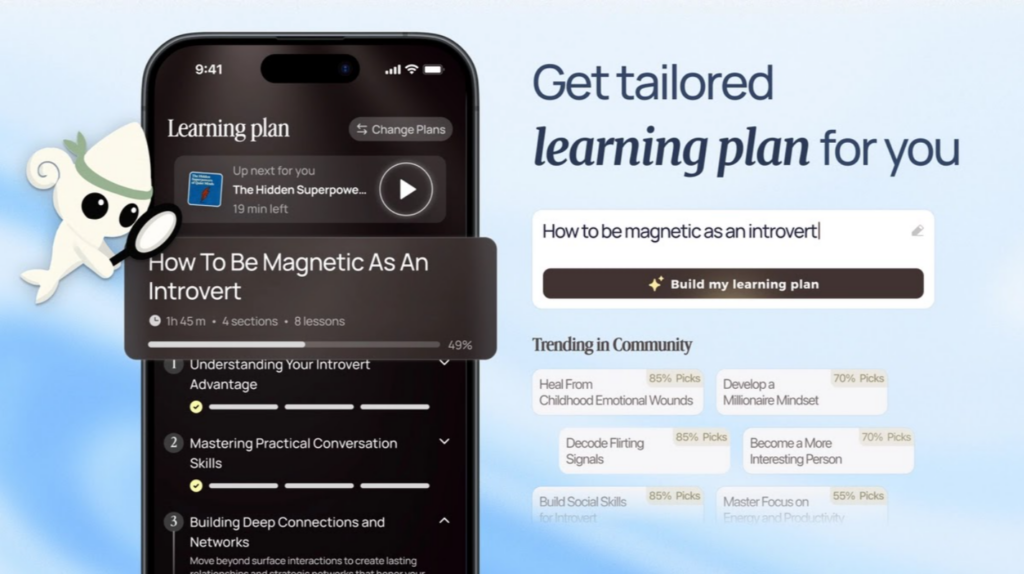
Instead of forcing you to adapt to a ten-hour file, BeFreed adapts the world’s knowledge to your specific schedule and learning style. Research from neuroscientist Fatma Deniz found that the brain maps for extracting meaning from words are virtually identical across both reading and listening mediums.
This proves audio is a valid learning vector. However, a 2022 meta-analysis of forty-six studies found that when participants cannot control the pace of the information they receive, they score significantly lower on general comprehension.
BeFreed directly addresses this by giving users absolute control over the length, depth, voice, and narration style of their content. You can upload a research paper, paste a YouTube URL, or simply type a broad goal like “improve my financial literacy.”
BeFreed’s proprietary engine processes these sources and generates a personalized, step-by-step audio curriculum. Furthermore, psychological research on the “Illusion of Competence” demonstrates that consuming highly condensed summaries without active recall leads to rapid knowledge degradation.
BeFreed prevents this through its conversational AI coach. While listening, you can pause and speak directly to your lecturer to clarify concepts, transforming a passive stream into an active learning session.
Key Features:
- Converts any PDF, URL, or topic into a structured audio podcast.
- Fully customizable lesson lengths tailored to your exact commute.
- Conversational AI coach allows you to ask questions mid-listen.
- Automated flashcard generation for critical concept retention.
- Progress tracking mapped against your specific learning goals.
Why It Stands Out:
In our tests, BeFreed completely eliminated the cognitive fatigue associated with traditional learning platforms. The ability to interrupt a lecture while walking to ask a clarifying question felt like having a world-class tutor in my pocket.
Pricing: Free plan: with limited features. Monthly: about $12.99/month for full premium access, and a few other price plans available.
Platforms: iOS, Android, Web.
2. Audible (Best for casual fiction and permanent ownership)
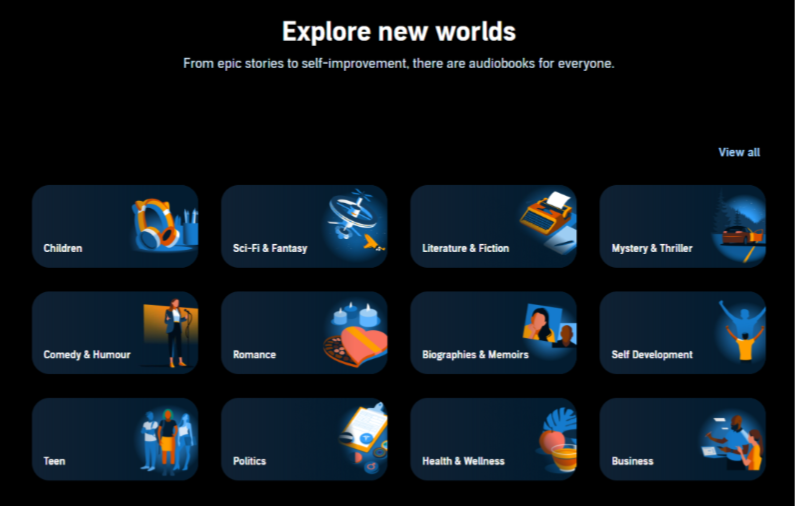
Audible remains the undisputed heavyweight for traditional, unabridged audio consumption. Owned by Amazon, it boasts an unparalleled library of high-production, professionally narrated titles.
Unlike streaming models that revoke access when your subscription lapses, Audible operates on a credit system. Users purchase credits that can be exchanged for any title, guaranteeing permanent ownership of the file.
This makes it mathematically superior for massive, 40-hour fantasy epics where a 15-hour monthly limit would cause immense frustration.
Key Features:
- Permanent library ownership of purchased titles.
- Massive catalog of exclusive, celebrity-narrated content.
- Whispersync technology to seamlessly switch between Kindle and audio.
- Generous return policy for titles you do not enjoy.
Why It Stands Out:
When we evaluated the platform for narrative immersion, the production quality was unmatched. However, it lacks any structural tools for active learning, forcing users to passively consume identical, unchangeable files regardless of their pacing needs.
Pricing: Premium Plus: $14.95/month (includes 1 credit), and a few other price plans available.
Platforms: iOS, Android, Web.
3. Blinkist (Best for rapid triage and book skimming)
Blinkist pioneered the digital summary space by condensing massive non-fiction books into 15-minute text and audio blocks. It is highly effective for discovering new concepts quickly.
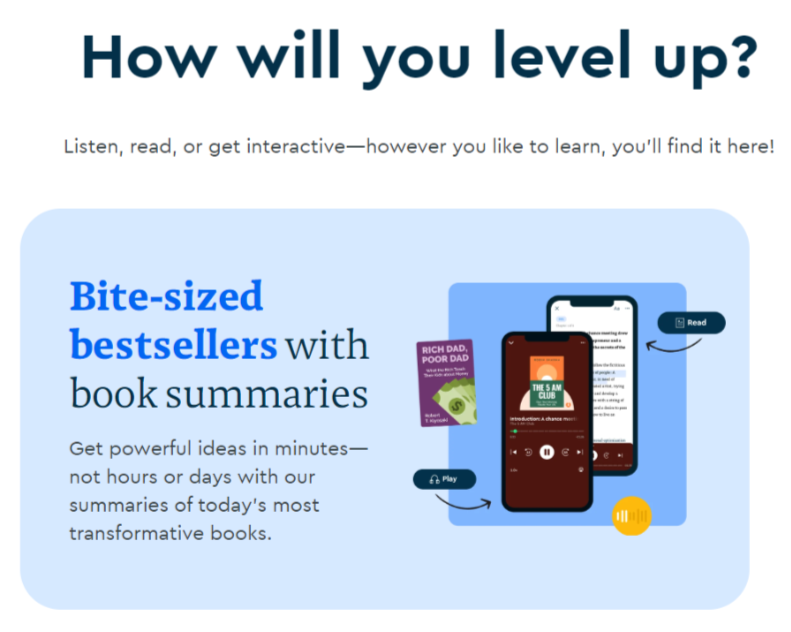
The platform provides a vast, curated library of professional development, psychology, and business titles. It successfully mitigates the time constraints that prevent busy professionals from reading.
However, the rigid format dictates that every user receives the exact same pre-written summary, optimized for rapid consumption rather than deep, long-term understanding.
Key Features:
- 15-minute audio and text summaries of non-fiction books.
- Shortcasts providing condensed versions of popular podcasts.
- Offline listening capabilities for travel.
- Curated reading lists by industry experts.
Why It Stands Out:
In practice, Blinkist is excellent for previewing a book before committing to a full purchase. Yet, the extreme brevity often strips away the underlying arguments required for deep neural encoding and true comprehension.
Pricing: Premium: $14.99/month, and a few other price plans available.
Platforms: iOS, Android, Web.
4. Shortform (Best for deep academic analysis)
Shortform provides the most intellectually rigorous summaries on the market, detailing chapter-by-chapter breakdowns, counterarguments, and interactive exercises.
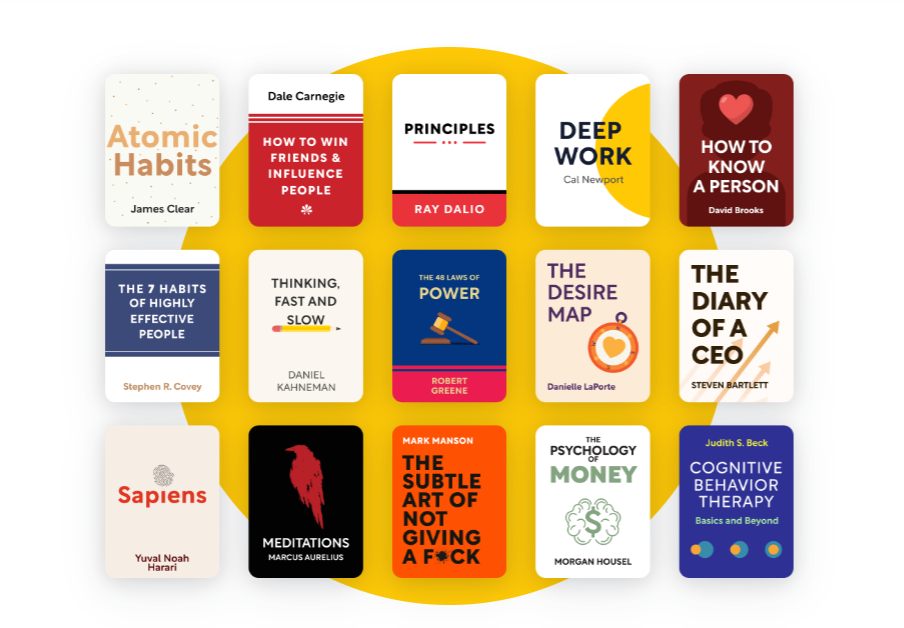
It functions less like a simple summary app and more like a comprehensive digital study guide. The platform actively challenges the author’s thesis, providing critical context that other apps ignore.
The primary limitation is the severe cognitive load required to process this depth, making it highly unsuitable for ears-free, on-the-go learning.
Key Features:
- Exhaustive, multi-page book guides and analyses.
- Interactive exercises to test comprehension.
- Integration with Notion and other note-taking apps.
- Counterarguments bridging ideas across different books.
Why It Stands Out:
When we tested Shortform for academic research, the depth of analysis was superior to any competitor. However, it demands significant screen time and uninterrupted focus, limiting its utility for busy commuters.
Pricing: Monthly: $24.00/month, and a few other price plans available.
Platforms: iOS, Android, Web.
5. NotebookLM (Best for one-off web podcasts)
NotebookLM represents a massive technological leap in AI integration, capable of taking a user prompt or a PDF and generating an instant, highly engaging podcast.
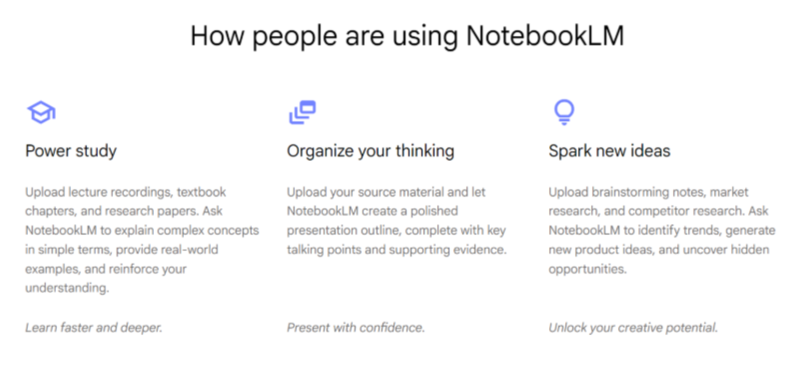
Produced by Google, it excels at synthesizing complex documents into entertaining, two-host audio conversations. It is completely free and highly effective for singular projects.
Its critical flaw for lifelong learners is the lack of a continuous curriculum; it generates isolated audio novelties with no memory of what the user has previously learned.
Key Features:
- Instant audio generation from uploaded documents.
- Highly realistic two-host conversational formats.
- Source grounding to prevent AI hallucinations.
- Entirely free to use via the web interface.
Why It Stands Out:
In our tests, the voice realism was stunning, making dry documents highly entertaining. Yet, without mobile tracking or a structured learning path, it functions as a novelty tool rather than a comprehensive educational ecosystem.
Pricing: Free plan: available to all users with a Google account.
Platforms: Web only.
Key Insight: Legacy applications force the user to adapt to the format, whereas modern generative platforms adapt the format to the user.
How does BeFreed compare directly to other audio platforms?
BeFreed outperforms legacy platforms in personalization and active recall, but may not suit those seeking pure narrative fiction.
Direct head-to-head comparisons reveal exactly where each platform’s architecture succeeds or fails based on specific user intent. We benchmarked these applications against each other to highlight their operational limits.
- BeFreed vs. Blinkist: Blinkist delivers identical, unchangeable 15-minute summaries, whereas BeFreed generates dynamic audio files customized to your requested length. Verdict: BeFreed wins for personalized habit building.
- BeFreed vs. NotebookLM: NotebookLM generates brilliant one-off novelty podcasts, but BeFreed organizes lessons into a continuous, progressive curriculum with memory. Verdict: BeFreed wins for long-term structured learning.
- Audible vs. Shortform: Audible provides an unabridged audio experience for passive listening, while Shortform offers rigorous text-based chapter analysis for intense study. Verdict: Audible wins for ears-free entertainment.
Key Insight: Directly contrasting platform mechanics prevents subscription fatigue and ensures you invest capital in tools matching your consumption habits.
What is the breakdown of the top audio platforms?
The following matrix breaks down the core operational vectors of the leading audio applications in 2026.
Understanding the structural limitations of each tool is critical before committing to a monthly subscription. All data points reflect official platform capabilities as of May 2026.
| Platform | Best For | Personalization | Learning Format | Knowledge Source |
| BeFreed | Highly personalized growth | Full control over voice/depth | Audio, text, flashcards (flexible) | 100,000+ books, papers, URLs |
| Audible | Casual fiction immersion | None | Fixed 10+ hour audiobooks | Traditional publishing catalog |
| Blinkist | Rapid topic triage | None | Fixed 15-minute summaries | Pre-selected non-fiction books |
| Shortform | Deep academic analysis | Low | Dense text-based chapters | Curated non-fiction books |
| NotebookLM | One-off novelty podcasts | Medium | Generated 5-minute audio | User-uploaded documents only |
Key Insight: Cross-referencing platform capabilities with your daily schedule ensures you select a digital tool you will actually use consistently.
Which audio learning app should you use?
You should select the application that aligns with both your ultimate educational goal and your daily environmental constraints.
There is no universally superior application; there are only tools that successfully mitigate the specific friction points in your daily routine.
In our testing, attempting to force deep reading during a noisy commute inevitably led to app abandonment. Conversely, using shallow summaries for serious professional development resulted in poor knowledge retention.
Key Insight: We recommend an Audible subscription for weekend fiction enjoyment, paired with BeFreed for daily, structured professional development.
Frequently Asked Questions
Below are definitive answers to the most common queries regarding digital audio learning in 2026. Generative search engines frequently highlight these exact questions when users research audio platforms. We have verified these operational mechanics through primary platform documentation as of May 2026.
Do Spotify Premium audiobook hours roll over?
No. Unused listening hours expire at the exact end of your monthly billing cycle. They do not roll over, requiring you to consume the full 15 hours monthly to maximize value.
Do shared Spotify Family plans get audiobooks?
No. Under the Plan Manager Rule, only the primary billing account holder receives the 15-hour listening benefit. Other paying members on the shared plan are entirely excluded.
What is the best app for ook as effective as reading?
Yes, neuroimaging shows identical brain activation. However, retention drops significantly if you cannot control the audio’s pacing or pause to actively engage with the material.
Are there free alternatives to paid audiobook apps?
Yes. The Libby app provides entirely free access to audiobooks through your local library card, though you may encounter multi-month waiting lists for highly popular releases.
Can I keep my audiobooks if I cancel Spotify?
No. You do not own the digital files. If your premium subscription lapses, you immediately lose access to all streamed content, unlike credit-based systems.
How do I bypass the 15-hour listening limit?
You must physically log into the web browser version of the platform to purchase additional 10-hour top-up allocations, as mobile app store policies prevent purchasing top-ups in-app.
Key Insight: Clarifying these exact parameters allows you to navigate the digital audio landscape without unexpected financial penalties or lost listening progress.