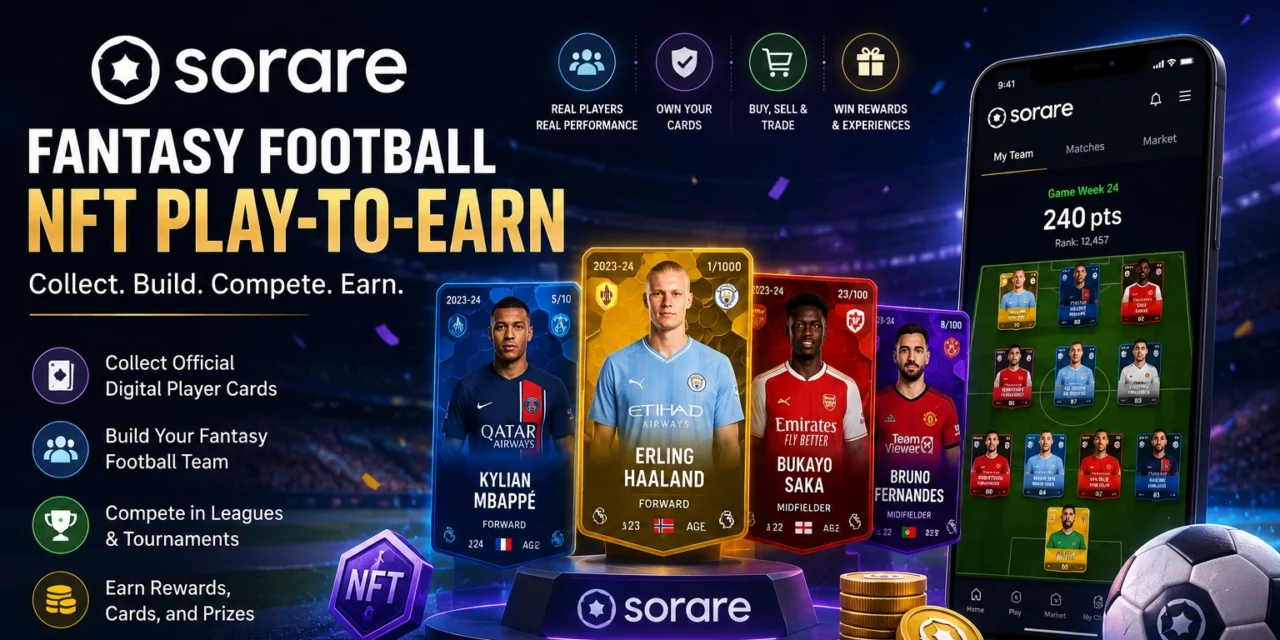
Sorare is one of the best-known examples of a fantasy football game using ownable digital player cards. Users collect cards of real football players, build fantasy teams, and compete based on real match performances. Sorare describes its football product as a free fantasy football game where users collect, buy, sell, and compete with ownable digital player cards from top leagues.
For app users, Sorare feels like a mix of fantasy football, trading cards, and sports prediction. For developers, it is a useful case study in NFT marketplaces, sports data integration, rewards, licensing, and digital ownership.
What Is Sorare?
Sorare allows users to act like football managers. They collect player cards, create teams, and enter competitions. The performance of the selected players in real-world matches decides the user’s fantasy score. Sorare also offers fantasy NBA and fantasy MLB products, showing that the model has expanded beyond football into a wider fantasy sports platform.
The important idea is ownership. Instead of only selecting players from a common database, users can own limited digital cards and trade them in the marketplace. This creates emotional value, scarcity, and collecting behavior.
The Business Model
Sorare’s business model combines fantasy sports, digital collectibles, marketplace activity, and rewards. Users can buy, sell, and collect cards. They can also compete for rewards such as cards, cash or ETH, signed jerseys, merchandise, tickets, and special experiences.
The platform benefits from card sales, marketplace activity, user engagement, partnerships with sports leagues, and long-term fantasy competitions. This model is different from normal fantasy sports because the collectible card itself becomes a key part of the experience.
For developers, this shows how a game can combine multiple revenue layers:
* Digital card sales
* Marketplace trading
* Premium scarcity
* Sports data-based competitions
* Brand and league partnerships
* Reward-driven user retention
The Trend in 2026
In 2026, NFT fantasy sports is more mature than the early Web3 hype period. Users are no longer attracted only by “earn money” promises. They expect real entertainment, official sports partnerships, simple onboarding, fair rules, and useful rewards.
Sorare’s continued focus on football, NBA, and MLB shows a broader trend: Web3 games are moving toward real sports fandom and long-term digital collecting, not just short-term speculation. At the same time, the market has become more careful because some NFT sports products have already faced problems. DraftKings officially discontinued Reignmakers and its NFT Marketplace on July 30, 2024, citing legal developments.
This makes 2026 a more serious phase for developers. The opportunity is still there, but the product must be legally clear, fun to play, and sustainable.
Similar Games
Several commercial apps and games have explored similar models. DraftKings Reignmakers was an NFT fantasy sports game, but it was discontinued in 2024. NFL Rivals is another sports NFT game example often listed among Web3 sports games. Fantasy sports and NFT-style collectible models are also seen in games and platforms such as Ultimate Champions, Splinterlands, Gods Unchained, and NBA Top Shot-style collectible ecosystems.
These examples show that the market is experimenting with different formats: trading cards, fantasy contests, collectible moments, team-building games, and marketplace-driven sports experiences.
Developer Challenges
The biggest challenge is licensing. A fantasy sports NFT platform needs rights for player names, clubs, leagues, images, and sports data. Without strong licensing, the product may face legal and commercial risks.
Regulation is another serious challenge. In 2024, Britain’s Gambling Commission prosecuted Sorare over alleged unlicensed gambling, while Sorare denied the allegation and said the regulator misunderstood its business model.
Developers must also handle wallet onboarding, marketplace security, fraud control, user verification, live sports data accuracy, and reward fairness. The game must remain enjoyable even if NFT prices or crypto interest goes down.
Advantages
The biggest advantage of Sorare’s model is deeper fan engagement. A football fan is not just watching a match. They are collecting players, building teams, checking performance, trading cards, and competing with other users.
For developers, this creates strong retention. Users may return every week because real matches keep the game alive. For businesses, it creates opportunities in digital collectibles, sports partnerships, analytics, rewards, and global fan communities.
Conclusion
Sorare Fantasy Football is an important example of how NFT collection, fantasy sports, and Play-to-Earn ideas can work together. It shows that digital ownership can make sports apps more engaging when combined with real-world performance and smart game design.
For app and game developers, Sorare gives a clear lesson. The future of NFT fantasy sports is not only about earning. It is about ownership, entertainment, trust, compliance, and community. With the right design and legal planning, a sports idea can become a strong software product for the next generation of fans.