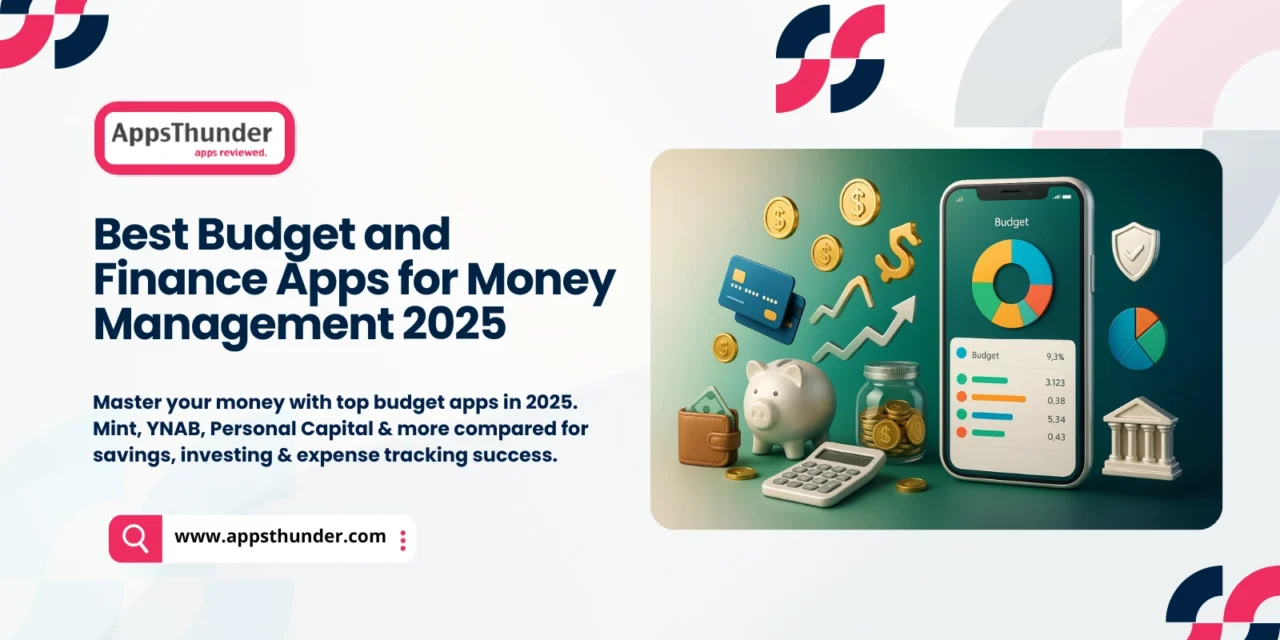
Taking control of your finances starts with knowing where your money goes. Budget and finance apps have revolutionized personal money management, with the finance app sector experiencing a 27% year-over-year growth in installs. From expense tracking to investment management and bill reminders, these digital tools make financial wellness accessible to everyone.
💰 Why Finance Apps Are Essential in 2025
Traditional budgeting with spreadsheets is time-consuming and prone to errors. Modern finance apps automatically sync bank accounts, categorize transactions, analyze spending patterns, and provide actionable insights—all in real-time. Users save an average of $600 annually just by tracking expenses consistently.
📱 Top Budget and Finance Apps for 2025
1. Mint – Comprehensive Free Budgeting
Mint by Intuit offers complete financial management at no cost, syncing all your accounts for a unified view of your financial health.
Key Features:
- Automatic transaction syncing from all accounts
- Budget creation and tracking by category
- Bill payment reminders
- Credit score monitoring (free)
- Investment tracking and net worth calculation
Best For: Budget beginners, comprehensive overview, free solution
Pricing: Completely free with ads.
2. YNAB (You Need A Budget) – Zero-Based Budgeting
YNAB teaches proactive budgeting philosophy where every dollar has a job, helping users break the paycheck-to-paycheck cycle.
Key Features:
- Zero-based budgeting methodology
- Real-time sync across devices
- Goal tracking and savings features
- Educational resources and workshops
- Shared budgets for couples
Best For: Serious budgeters, debt payoff, building savings
Pricing: $14.99/month or $109/year (34-day free trial)
3. Personal Capital – Wealth Management Focus
Personal Capital combines budgeting tools with sophisticated investment tracking and retirement planning for high-net-worth individuals.
Key Features:
- Net worth tracking dashboard
- Investment portfolio analysis
- Retirement planning calculator
- 401(k) fee analyzer
- Free financial advisor consultations
Best For: Investors, retirement planning, wealth tracking
Pricing: Free app; optional paid advisory services
4. PocketGuard – Simplified Spending Tracking
PocketGuard answers the simple question “How much can I spend?” by calculating your available spending money after bills and savings.
Key Features:
- “In My Pocket” spending calculator
- Automatic bill tracking
- Spending limits by category
- Subscription finder and cancellation
- Debt payoff planner
Best For: Overspenders, simple interface, spending control
Pricing: Free basic; PocketGuard Plus at $7.99/month
5. Goodbudget – Envelope Budgeting System
Goodbudget modernizes the classic envelope budgeting method, perfect for couples and families managing money together.
Key Features:
- Virtual envelope budgeting
- Sync across five devices
- Debt tracking and payoff planning
- Budget history and reports
- No bank account syncing (manual entry)
Best For: Couples, cash-based budgeters, envelope method fans
Pricing: Free (10 envelopes); Plus at $8/month (unlimited envelopes)
6. Empower (formerly Personal Capital) – AI-Powered Insights
Empower uses artificial intelligence to provide personalized financial advice and automated savings recommendations.
Key Features:
- AI-driven spending insights
- Automated savings tools
- Cash back on purchases
- Investment tracking
- Bill negotiation service
Best For: Tech-savvy users, automated savings, AI recommendations Pricing: Free basic features; Premium at $8/month
7. Rocket Money (formerly Truebill) – Subscription Manager
Rocket Money specializes in finding and canceling unwanted subscriptions while providing full budgeting features.
Key Features:
- Subscription tracking and cancellation
- Bill negotiation service
- Smart savings automation
- Credit monitoring
- Spending insights by merchant
Best For: Subscription management, bill reduction, finding savings
Pricing: Free basic; Premium at $6-12/month (based on income)
💡 Choosing Your Finance App
By Financial Goal:
- Building savings: YNAB, Goodbudget
- Investment tracking: Personal Capital, Empower
- Debt payoff: YNAB, PocketGuard
- Simple budgeting: Mint, PocketGuard
- Cutting expenses: Rocket Money, Mint
By Budget Level:
✅ Free solutions → Mint, Personal Capital
✅ Under $10/month → PocketGuard, Goodbudget
✅ Premium features → YNAB ($14.99/month)
🎯 Financial Management Best Practices
Link All Accounts: Complete picture requires checking, savings, credit cards, and investments
Set Realistic Goals: Start with achievable targets and build momentum
Review Weekly: Spend 15 minutes reviewing transactions and adjusting budgets
Automate Savings: Set up automatic transfers to savings accounts
Track Net Worth: Monitor overall financial health beyond just cash flow
📊 Feature Comparison
Best Free Option:
- Mint (most features)
- Personal Capital (investment focus)
- Goodbudget (10 envelopes free)
Best for Couples:
- YNAB (shared budgets)
- Goodbudget (multi-device sync)
- Mint (multiple user support)
Best for Investors:
- Personal Capital (portfolio tools)
- Empower (AI insights)
- Mint (basic tracking)
🔒 Security and Privacy
Critical considerations:
- Bank-level 256-bit encryption standard
- Two-factor authentication enabled
- Read-only access to accounts (can’t move money)
- Regular security audits
- Privacy policy review for data selling practices
🚀 Getting Started Tips
Week 1: Link accounts and observe spending patterns
Week 2: Create realistic budget categories
Week 3: Set savings and debt payoff goals
Week 4: Review and adjust based on actual spending
Month 2+: Optimize and automate your financial system
❓ FAQ
1. Are finance apps safe to use with bank accounts? Yes, reputable apps use bank-level 256-bit encryption and read-only access. They cannot move money or make transactions, only view account information.
2. Which budget app is best for beginners? Mint offers the most user-friendly experience with automatic categorization and is completely free, making it ideal for budgeting beginners.
3. Can finance apps really help you save money? Absolutely! Studies show people who track expenses save an average of $600+ annually by identifying unnecessary spending and optimizing financial habits.
4. Do I need to pay for a budgeting app? Not necessarily. Mint and Personal Capital offer robust free features. However, paid apps like YNAB provide structured methodology and education worth the investment for serious budgeters.
5. How much time does budget tracking require? Initially, 30-60 minutes for setup. Ongoing maintenance requires just 10-15 minutes weekly for reviewing transactions and adjusting budgets. Most apps automate the heavy lifting.
🔑 Conclusion
The right finance app transforms money management from stressful to simple. Mint offers comprehensive free tracking, YNAB teaches proactive budgeting philosophy, Personal Capital excels for investors, and Rocket Money eliminates subscription waste. The best app is the one you’ll check consistently.
Take control of your finances today by downloading one app and linking your accounts. Within weeks, you’ll have clear visibility into spending patterns and actionable insights for improving your financial health. The average user saves $50-100 monthly just by awareness gained from tracking.