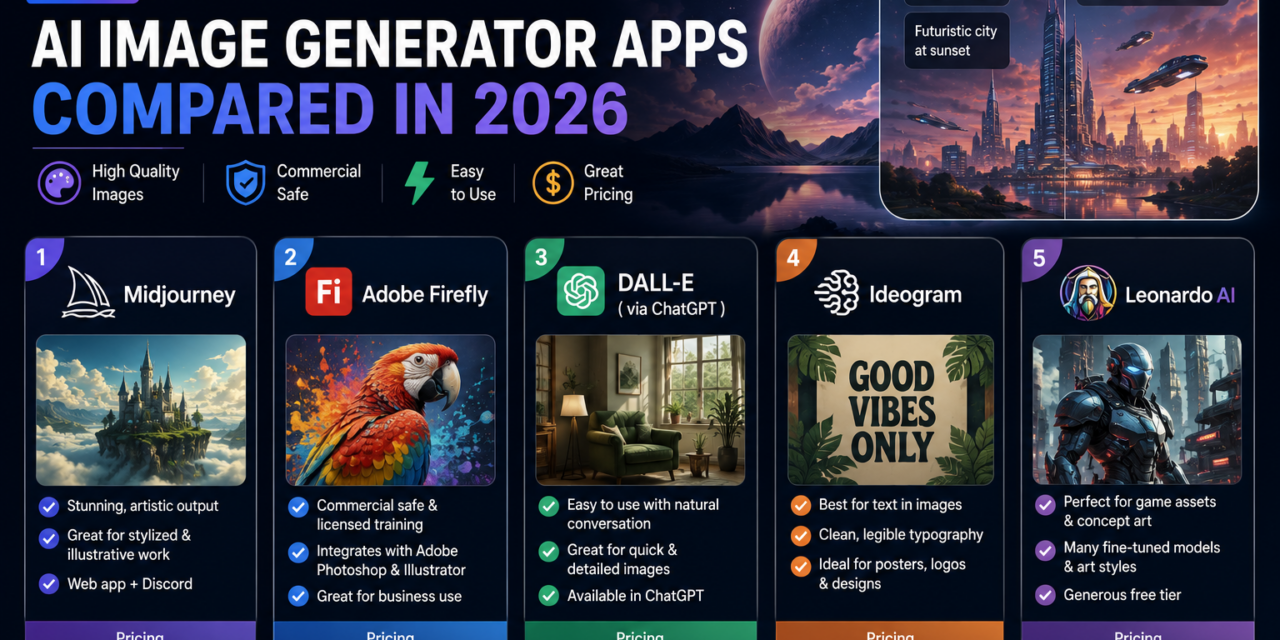
AI image generation has moved well past novelty status, with tools now genuinely useful for marketing creatives, social content, and quick concept visuals that used to require a designer’s time. The gap between the leading tools has also narrowed considerably, making the choice less about raw image quality and more about pricing, licensing terms, and how each tool fits into an existing workflow. New models ship almost every month now, which means a ranking like this one is really a snapshot rather than a permanent verdict, but the core strengths of each platform tend to hold steady even as the underlying models improve. Here’s how the top AI image generator apps compare in 2026.
Midjourney
Midjourney continues to produce some of the most visually striking, artistic output of any generator on this list, particularly for stylized and illustrative work rather than strict photorealism. Its Discord-based workflow has become more accessible with a proper web app, though it still has a slightly steeper learning curve than competitors.
Adobe Firefly
Firefly’s biggest advantage is commercial licensing clarity, since it’s trained on licensed and public domain content, which makes it a genuinely safer choice for businesses worried about copyright exposure in their marketing materials. Deep integration with Photoshop and Illustrator also makes it a natural fit for teams already inside Adobe’s ecosystem.
DALL-E (via ChatGPT)
DALL-E’s integration inside ChatGPT makes it one of the most accessible tools on this list, letting users iterate on an image through natural conversation rather than learning specific prompt syntax. It’s a strong pick for casual users who want good results without studying prompt engineering guides first.
Ideogram
Ideogram has carved out a specific niche in generating clean, legible text within images, an area where most other AI image generators have historically struggled badly. It’s the go-to pick specifically for posters, logos, or any visual that needs actual readable words baked into the design.
Leonardo AI
Leonardo AI focuses heavily on game asset and concept art generation, with fine-tuned models tailored to specific art styles that give creators more consistent control than general-purpose tools. Its generous free tier also makes it approachable for hobbyists testing the waters before committing to a paid plan.
Licensing Is the Question Most People Skip
Image quality gets all the attention in these comparisons, but licensing terms are often the more important factor for anyone using generated images commercially rather than just for personal fun. Tools trained on scraped web data carry more legal ambiguity around copyright than tools like Adobe Firefly, which was specifically built around licensed training data to reduce that risk for business customers. Before using any AI-generated image in a client project, advertising campaign, or published product, it’s worth reading the specific platform’s commercial usage terms rather than assuming all these tools carry the same rights, since they genuinely don’t.
There isn’t a single best AI image generator anymore, the leading tools have each carved out a specific strength, whether that’s artistic style, legible text, licensing safety, or ease of use through natural conversation. For most business use cases where copyright exposure matters, Firefly is the safer default, while Midjourney and Ideogram remain worth a look for projects where visual style or in-image text is the priority. Whichever tool you settle on, keep an eye on how quickly this space moves, a comparison like this one is genuinely likely to shift again within just a few months as new models ship.