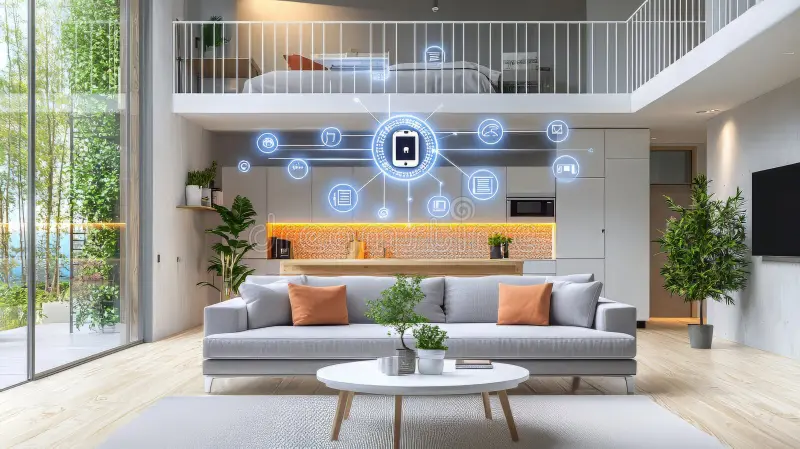
The Internet of Things (IoT) refers to a network of connected devices that collect, exchange, and act on data. When applied to smart living, IoT integration enables devices like smart speakers, lighting systems, and appliances to communicate seamlessly.
Imagine walking into your home and the lights adjust automatically, the temperature sets to your preference, and your security system updates you on today’s activity—all without lifting a finger. That’s the power of IoT integration.
Benefits of Smart Living with IoT
1. Enhanced Security
Smart security apps like locks, cameras, and motion sensors provide real-time monitoring and alerts, giving homeowners peace of mind whether they’re at home or away.
2. Energy Efficiency
Devices such as smart thermostats and smart lighting adjust based on occupancy and usage patterns, reducing energy bills and environmental impact.
3. Improved Convenience
Voice assistants and connected appliances simplify daily tasks—whether it’s controlling the oven remotely or asking a smart speaker to play music.
4. Health and Wellness
IoT wearables like Fitbit and air quality monitors help track vital data and maintain healthier living environments.
5. Cost Savings
By optimizing resource use, IoT devices lower long-term costs for energy, maintenance, and even insurance.
Key Devices in IoT-Enabled Smart Homes
- Smart Speakers (Amazon Alexa, Google Nest)
- Smart Thermostats (Nest, Ecobee)
- Smart Security Systems (Ring, Arlo)
- Smart Lighting (Philips Hue, LIFX)
- Wearables (Apple Watch, Fitbit)
- Smart Appliances (Samsung SmartThings)
Challenges of IoT Integration
While IoT offers many benefits, challenges include:
- Privacy and Security Risks – Data breaches and hacking attempts target connected devices (Kaspersky IoT Security).
- Compatibility Issues – Not all devices integrate seamlessly.
- Initial Costs – Upgrading to IoT-enabled devices can be expensive.
Despite these challenges, the long-term advantages outweigh the concerns when proper safeguards are in place.
The Future of Smart Living and IoT
IoT integration is expected to become even more powerful with the rise of AI-powered automation, 5G connectivity, and edge computing. This means smarter homes, faster response times, and better decision-making based on real-time data.
Smart cities, connected cars, and healthcare innovations will continue to expand the possibilities of IoT, making everyday life more efficient and connected than ever.
FAQs on Smart Living & IoT Integration
1. What is smart living in IoT?
Smart living in IoT refers to using connected devices to automate and optimize daily tasks, improve security, and enhance lifestyle convenience. See more on web apps for smart living.
2. How does IoT make homes energy-efficient?
IoT devices like smart thermostats and lighting systems analyze usage patterns and adjust automatically, reducing unnecessary energy consumption.
3. Are IoT-enabled smart homes secure?
Yes, but only if proper precautions are taken. Use strong passwords, enable two-factor authentication, and keep device firmware updated to minimize risks.
4. What are the best IoT devices for beginners?
Smart speakers, thermostats, and lighting systems are excellent starting points for anyone new to smart living. You can explore more in utility apps.
5. What is the future of IoT in smart living?
The future includes deeper AI integration, enhanced automation, smart city development, and seamless device interoperability.