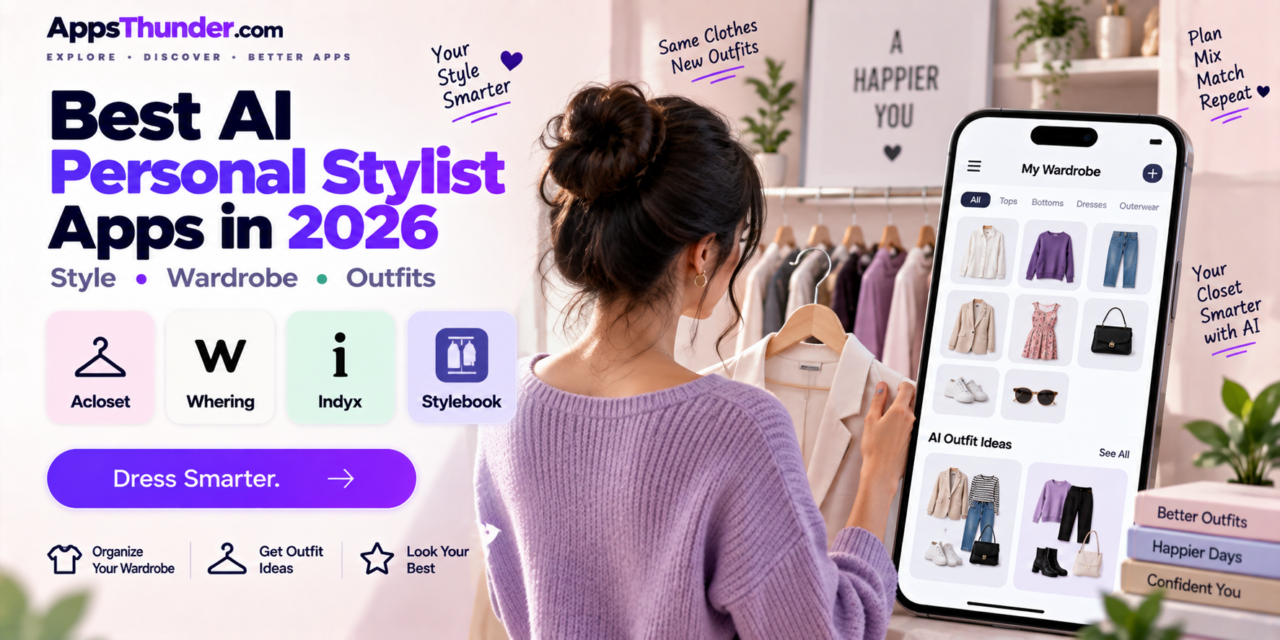
The average person reportedly wears only about 20 percent of their wardrobe regularly, with the rest sitting forgotten simply because remembering what’s owned and how it combines takes genuine mental effort. AI personal stylist and wardrobe apps address this directly by cataloging an existing closet through photos and then using AI to generate outfit combinations, plan looks for specific occasions, and even suggest thoughtful new purchases that genuinely complement what’s already owned rather than duplicating it. Here’s a look at what’s worth using this year.
Acloset
Acloset uses AI-powered background removal to automatically catalog clothing photos into a clean, organized digital closet, then generates outfit suggestions by mixing and matching items already owned based on weather, occasion, and personal style preferences. Its genuinely large user base has made it one of the most established names in the category, with a social feed feature letting users share and discover outfit inspiration from other members. For anyone starting from scratch with wardrobe cataloging, its automated background removal considerably speeds up the otherwise tedious process of photographing and organizing an entire closet.
Whering
Whering distinguishes itself with genuinely detailed wardrobe analytics, tracking cost-per-wear for every cataloged item and showing exactly which pieces are earning their closet space versus quietly sitting unworn. Its AI stylist generates full outfit suggestions incorporating weather data and a user’s calendar, planning looks ahead of time for specific upcoming events rather than only suggesting an outfit for the current day. For anyone who wants their wardrobe app to double as a genuine tool for smarter future purchasing decisions, informed by real data on what actually gets worn, it remains one of the more analytically minded options available.
Indyx
Indyx takes a more automated approach to closet cataloging, using computer vision to identify and tag clothing items from photos with minimal manual data entry required, building a searchable digital wardrobe considerably faster than apps requiring detailed manual tagging for every piece. Its outfit recommendation engine factors in a user’s specific style preferences learned over time, becoming more accurate and personalized the longer the app gets used. For users who found the initial cataloging process in other wardrobe apps too tedious to complete, its lighter-touch, more automated approach removes a genuine barrier to actually finishing the setup.
Stylebook
Stylebook remains one of the longest-established digital wardrobe apps, offering deep manual customization for users who want granular control over how their closet gets organized and tagged rather than relying entirely on automated AI cataloging. Its packing list and outfit-planning calendar features have made it a particular favorite among frequent travelers who want to plan an entire trip’s wardrobe in advance, ensuring every packed item genuinely pairs with something else rather than bringing pieces that don’t combine well together. Its more manual, detail-oriented approach appeals specifically to users who enjoy the organizing process itself rather than wanting it fully automated away.
Choosing between these four largely comes down to how much manual control versus automation a user actually wants in the cataloging process. Anyone who wants the fastest possible setup with minimal manual tagging should start with Acloset or Indyx, both leaning heavily on AI-powered automation to speed up closet cataloging. Users who want genuine data-driven insight into cost-per-wear and smarter future purchasing decisions will get more value from Whering’s analytics-focused approach, and frequent travelers or detail-oriented organizers who enjoy granular manual control should look toward Stylebook’s more traditional, customizable structure.
Conclusion
AI wardrobe and personal stylist apps have made genuine progress at solving a surprisingly common problem, forgetting what’s actually sitting in a closet and how it combines, turning an underused wardrobe into something genuinely wearable again. Whichever of these four ends up fitting a specific organizing style, the underlying payoff remains the same: getting real, everyday use out of clothes already owned rather than reaching for the same familiar handful of outfits on repeat.