Producing even a short video clip used to require actual filming, equipment, and editing skill, a genuinely significant barrier for creators, marketers, and small businesses who needed visual content but lacked the resources for a full production. AI video generator apps have changed that calculus considerably, letting someone describe a scene in plain text and receive a genuinely usable short video clip back within minutes, complete with realistic motion and lighting that would have required real filming equipment just a couple of years ago. In 2026, quality has improved enough that generated clips regularly work for social content, concept visualization, and rough storyboarding without needing a disclaimer explaining the limitations. Here are five AI video generator apps worth using this year. Most also let you download generated clips in standard formats compatible with typical editing software, avoiding any lock-in to a single platform’s own proprietary export system.
Runway
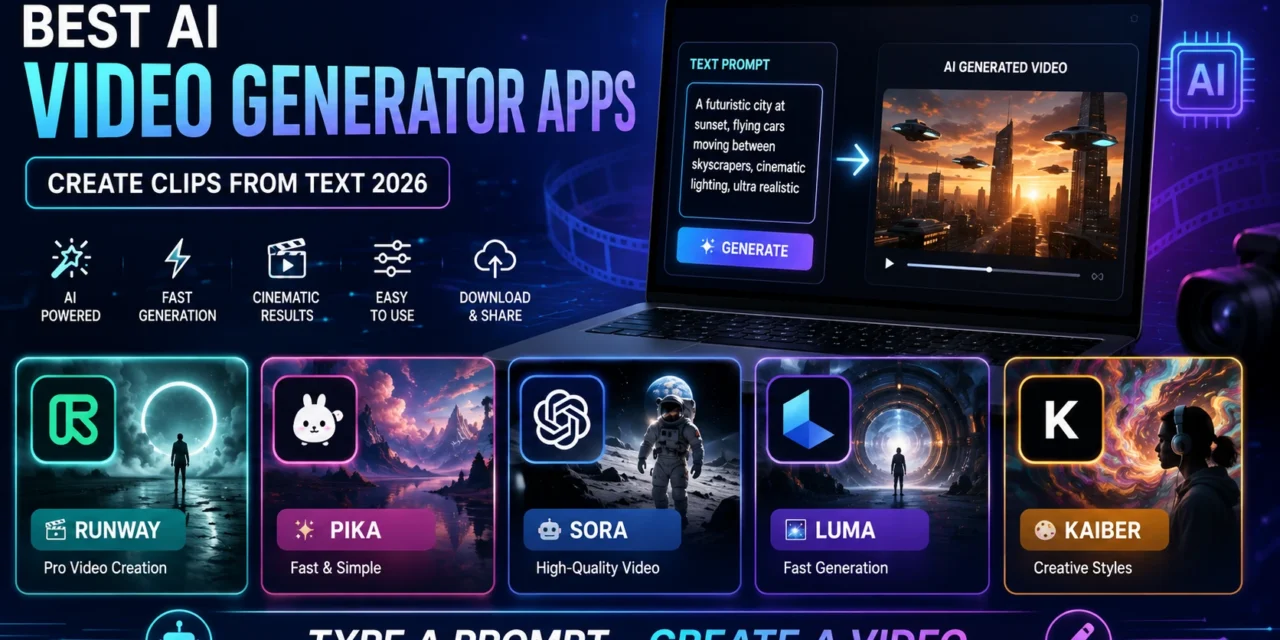
Runway remains a leader in AI video generation, offering genuinely strong text-to-video and image-to-video capabilities alongside professional editing tools, appealing to creators who want generation and refinement in the same connected workflow.
Pika
Pika focuses specifically on approachable, fast video generation with a genuinely simple interface, appealing to users who want quick results without needing to learn detailed prompt engineering or complex settings.
🔗 pika.art
OpenAI Sora
Sora produces genuinely striking, high-fidelity video generation with strong physical realism and coherent motion, appealing to creators who prioritize visual quality and are willing to work within its specific access and pricing structure.
Luma Dream Machine
Luma Dream Machine offers genuinely fast generation speeds with solid visual coherence, appealing to users who want to iterate quickly through several generated variations rather than waiting a long time for each individual result.
Kaiber
Kaiber specializes in genuinely stylized, artistic video generation particularly suited to music videos and creative visual content, appealing to musicians and artists wanting a distinctive visual style rather than photorealistic output.
The right tool depends heavily on the specific visual style and workflow priorities involved. Runway suits creators wanting generation and professional editing combined in one platform, while Pika suits users prioritizing speed and simplicity over granular creative control. Sora is worth prioritizing specifically for projects where visual realism and physical coherence matter most, accepting its particular access constraints as a tradeoff. Luma Dream Machine’s fast iteration suits creators who want to quickly explore several variations of a concept before committing to refining one. Kaiber’s stylized output suits musicians and artists specifically wanting an artistic visual treatment rather than photorealistic footage, a genuinely different creative goal than the other tools on this list prioritize. It’s worth checking each platform’s licensing terms directly before using generated video commercially, since usage rights and any required attribution can vary meaningfully between these tools.
AI video generation has crossed a genuine threshold from novelty into a practical production tool for creators and businesses who need visual content without a full film crew. Pick based on the specific visual style and workflow you’re actually working within, and test the same prompt across two or three tools before committing, since output style varies more between these platforms than a single demo reel ever fully reveals. The best generated clip is still only as good as the specific prompt behind it, so treating prompt writing itself as a real skill pays off quickly.