Needing a custom image used to mean either paying a designer, browsing stock photo sites for something close enough, or settling for a generic template that a dozen other brands were probably also using. AI image generators have genuinely changed that calculus, letting creators describe exactly what they need in plain language and get a usable starting visual back within seconds rather than days. The category has matured considerably in 2026 too, with licensing terms clarified for commercial use on several major platforms and image quality reaching a point where the output regularly passes as professionally produced rather than obviously AI-generated. Here are five AI image generator apps worth using this year, depending on what kind of creative work you’re actually producing. Most offer a free tier with a limited number of monthly generations, making it easy to test output quality before committing to a paid subscription.
Midjourney
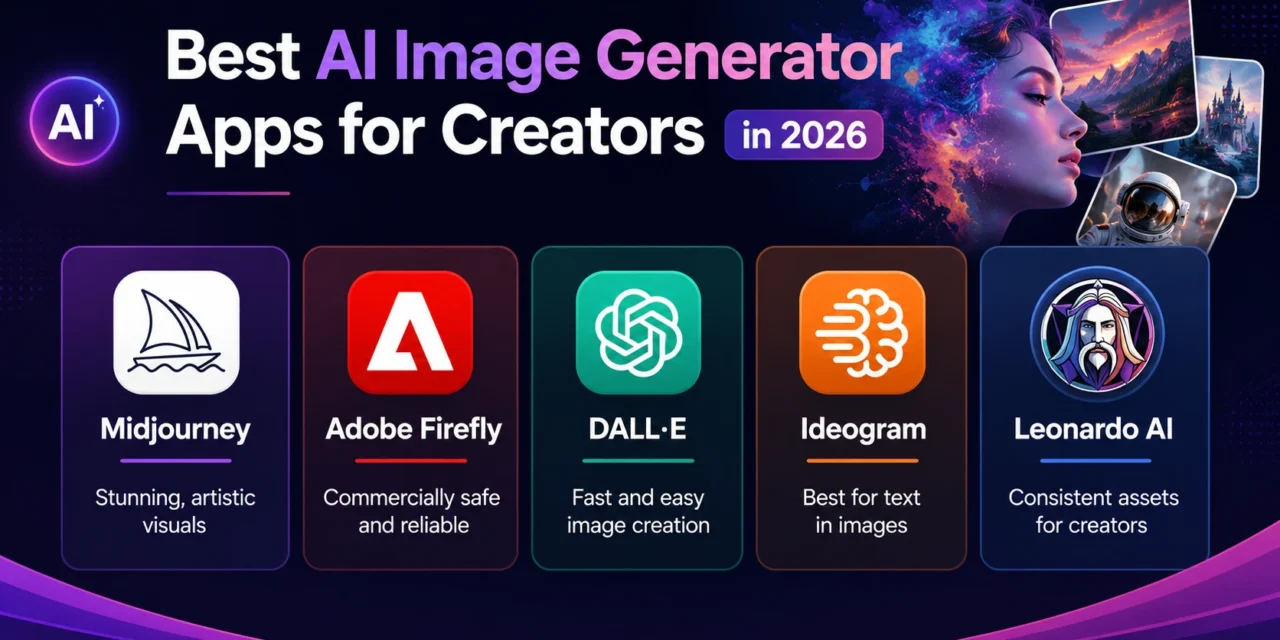
Midjourney remains the favorite among creators prioritizing striking, artistic visual quality, consistently producing images with a distinctive polish that other generators still struggle to match, though its Discord-based workflow takes some getting used to.
Adobe Firefly
Adobe Firefly integrates directly into Photoshop and Illustrator, with commercially safe training data and clear licensing that appeals strongly to brands and agencies concerned about copyright risk in client-facing creative work.
🔗 www.adobe.com/products/firefly.html
DALL-E
DALL-E, accessible through ChatGPT, offers a genuinely fast and conversational way to iterate on an image through natural back-and-forth chat refinement rather than needing to master complex prompt syntax upfront.
Ideogram
Ideogram stands out specifically for its ability to render legible, accurate text within generated images, solving a problem that has historically tripped up nearly every other AI image generator on the market.
Leonardo AI
Leonardo AI targets game developers and designers specifically with fine-tuned models for consistent character and asset generation, useful for projects needing a cohesive visual style across dozens of related images rather than one-off pieces.
Licensing clarity should weigh heavily for anyone using generated images in commercial client work, making Adobe Firefly the safer default for agencies and brands specifically concerned about copyright exposure, even if Midjourney’s raw visual quality sometimes edges it out artistically. Creators who want fast, conversational iteration without learning detailed prompt engineering syntax benefit most from DALL-E’s chat-based refinement inside ChatGPT. Anyone needing text to actually render correctly within an image, like a poster or a logo mockup, should reach for Ideogram specifically, since most competitors still garble text into nonsense characters. Game developers and anyone needing a consistent visual style across many related assets get more practical value from Leonardo AI’s fine-tuned model approach than from a general-purpose generator reset with every new prompt, since consistency across dozens of images matters more than any single striking result.
AI image generation has moved from a novelty into a genuinely practical creative tool in a remarkably short time, closing gaps that used to require hiring a designer or settling for generic stock photography. Pick based on your specific need, artistic quality, commercial licensing safety, or text rendering, since these tools have diverged enough in strength that the right choice really does depend on the actual job at hand. Testing the same prompt across two or three of these before committing tends to reveal that divergence faster than reading any single review, and it costs nothing but a few minutes on each platform’s free tier.