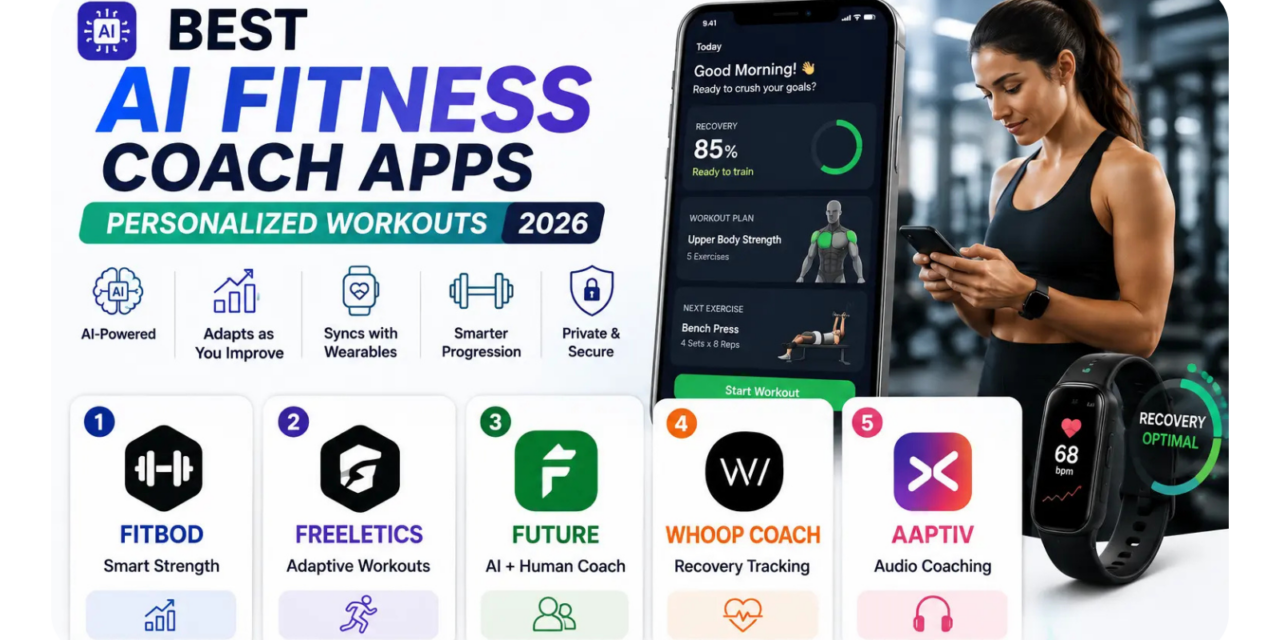
A generic workout plan followed identically by everyone genuinely ignores how differently each person actually responds to training, recovers between sessions, and progresses over time, leaving real room for a program that adapts based on genuine individual performance data rather than a fixed template. AI fitness coach apps have gotten considerably better at that personalization, adjusting weight, volume, and exercise selection automatically based on how a specific person’s strength and recovery are actually trending rather than following a rigid schedule regardless of real progress. Here are five AI fitness coach apps worth using this year for genuinely personalized training. Most also sync directly with a phone’s health app or a wearable device, feeding sleep and heart rate data back into the AI’s recommendations rather than relying purely on logged workout performance alone. Progressive overload calculations have also gotten noticeably smarter, automatically nudging weight or reps upward only once genuine strength gains actually justify the increase rather than following a fixed weekly schedule.
Fitbod

Fitbod builds a genuinely personalized strength training program based on available equipment and recent workout history, automatically adjusting weight and rep recommendations as it learns a user’s actual strength progression over time.
🔗 Download on Play Store | fitbod.me
Freeletics

Freeletics uses AI-driven coaching to adapt bodyweight and equipment-based training plans based on genuine performance feedback after each workout, appealing to users who want adaptive programming without needing a gym membership at all.
🔗 Download on Play Store | www.freeletics.com
Future
Future pairs AI-assisted programming with a genuine human coach reviewing and adjusting the plan, appealing to users who want algorithmic adaptation combined with real accountability from an actual person checking in regularly.
🔗 Download on Play Store | www.future.co
Whoop Coach
Whoop’s coaching features use genuinely detailed recovery and strain data to recommend whether a hard training day or active recovery makes more sense on a given day, personalizing intensity based on real physiological readiness.
Aaptiv
Aaptiv combines AI-adjusted training plans with genuinely motivating audio-coached workouts, appealing to users who want real-time verbal encouragement and pacing guidance rather than a purely visual, self-paced program.
The right app depends on how much human accountability a person genuinely needs alongside algorithmic adaptation. Fitbod and Freeletics suit users comfortable with a purely AI-driven approach without needing a human check-in, adjusting based on logged performance automatically. Future suits users who specifically want a real human coach’s oversight and accountability layered on top of AI-assisted programming. Whoop Coach suits users who already track detailed recovery data and want training intensity recommendations grounded in that physiological readiness information specifically. Aaptiv suits users who find audio-coached, real-time guidance more motivating than a purely self-directed app interface during an actual workout. It’s worth trying the free tier of two or three of these against the exact same starting fitness level before committing to a paid subscription, since coaching style and tone genuinely vary enough between them that personal fit matters as much as raw feature depth.
AI-personalized fitness coaching genuinely closes the gap between a generic template and a program that actually adapts to real individual progress and recovery patterns. Pick based on how much human accountability you personally need alongside algorithmic adaptation, and let a program that actually responds to your real performance replace the frustration of a one-size-fits-all plan that never quite fit. Consistency still matters more than any specific app’s algorithm, so pick whichever option genuinely keeps you opening it several times a week rather than the one with the most impressive feature list on paper. A slightly simpler program followed consistently beats an ideal one abandoned after two weeks every single time.